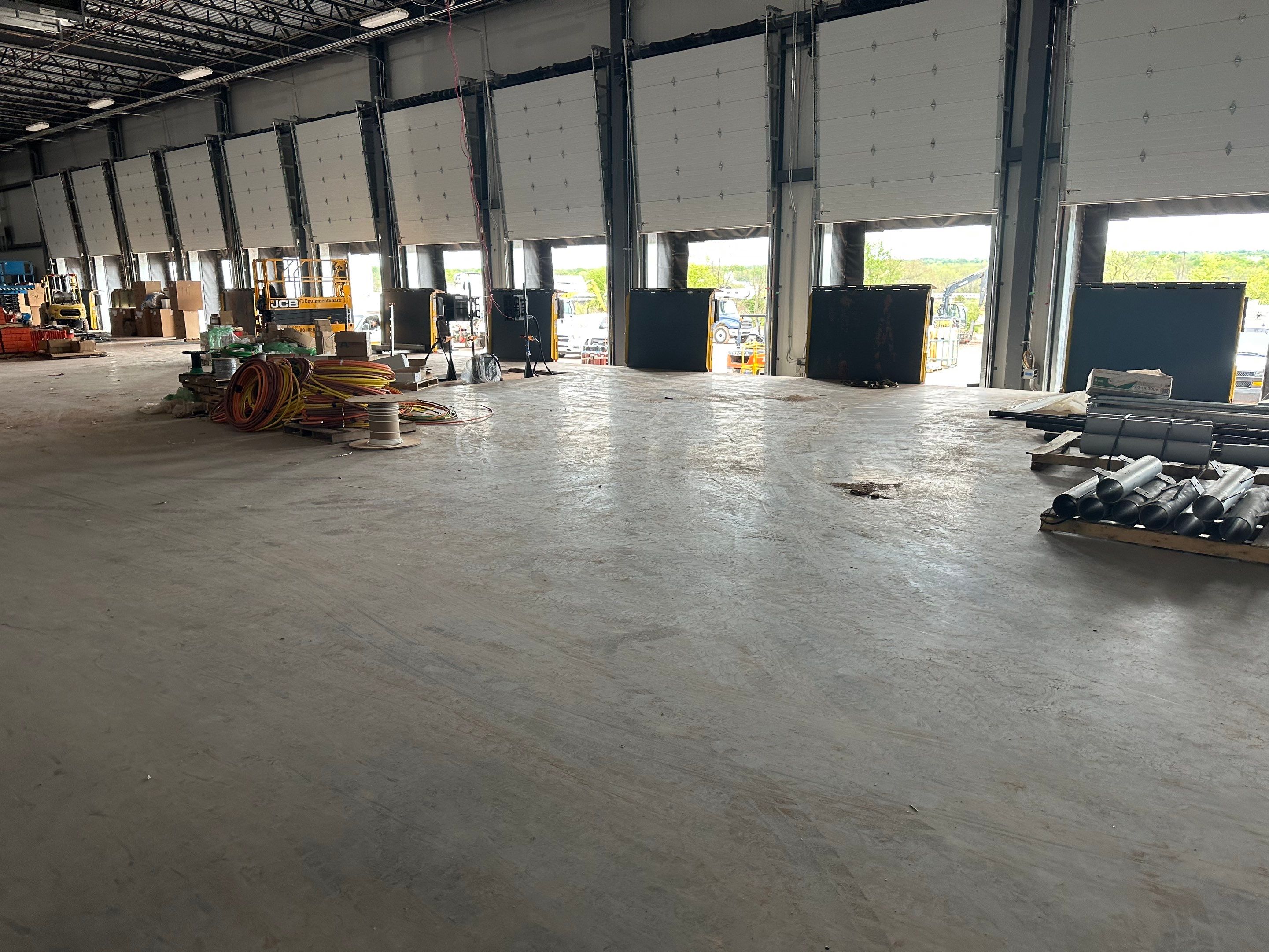
The drywall is taped and painted. The flooring is down. The fixtures are installed. The punch list is shrinking. The general contractor calls for a broom sweep, the crew pushes the visible dust into a pile, and the building is declared ready for turnover.
Except it is not.
What the contractor calls clean and what the building owner, tenant, or facility manager considers move-in ready are two very different standards. The gap between a construction crew’s final sweep and an actual occupancy-ready condition is enormous, and closing that gap is one of the most specialized, detail-intensive, and frequently underestimated cleaning projects in the commercial cleaning industry.
We have cleaned spaces after new construction, full gut renovations, tenant buildouts, retail fit-outs, medical office conversions, restaurant openings, school expansions, and every other type of commercial construction project you can imagine. And in every single case, what we find when we arrive is a building that looks finished but is not clean. Not even close.
This guide covers what post-construction cleaning actually involves at a professional level, why it is fundamentally different from janitorial cleaning, the specific challenges that make it difficult, the areas that almost everyone overlooks, and what it takes to deliver a space that is genuinely ready for the people who will occupy it.
Why a Contractor’s “Broom Clean” Is Not a Clean Building
Most construction contracts include a clause requiring the general contractor to deliver the building in “broom clean” condition. This means the construction crew will remove their materials, haul out bulk debris, and give the floors a basic sweep before they hand over the keys. For the contractor, the job is done.
For the person who has to occupy, lease, or operate the building, the job is just beginning. Here is what a broom-clean building typically still contains.
- Fine construction dust on every surface. Drywall sanding, concrete cutting, tile installation, and wood framing all generate fine particulate that a broom cannot capture. This dust settles on every horizontal surface in the building: window sills, door frames, light fixtures, cabinet interiors, countertops, shelving, HVAC registers, and the tops of walls. It also becomes airborne with the slightest disturbance and will resettle continuously for days after construction ends unless it is properly removed with HEPA-filtered equipment.
- Adhesive residue, tape marks, and labels. Protective films on windows, appliances, and fixtures leave adhesive residue when removed. Painter’s tape leaves marks on trim and door frames. Manufacturer labels on plumbing fixtures, cabinets, and hardware are still attached. Sticker residue on glass, countertops, and flooring is common throughout.
- Paint overspray, drips, and splatters. Even careful painters leave traces. Overspray on window glass, drips on floor surfaces, splatters on light fixtures, and paint haze on hardware are standard findings in post-construction environments.
- Scuff marks and footprints. Construction boots on new flooring leave black scuff marks. Handprints on freshly painted walls are visible at certain angles. Footprints tracked through drywall dust are embedded in floor finishes.
- Caulk smears and grout haze. Bathroom and kitchen tile work leaves grout haze on tile surfaces that obscures the finish until it is properly cleaned. Caulk around sinks, tubs, and trim often has smears and excess material on adjacent surfaces.
- Dust inside HVAC ductwork. If the HVAC system was run during any phase of construction, the ductwork now contains construction dust. When the system is turned on for occupants, that dust is distributed into every room in the building through every supply register. This is one of the most consequential and most commonly ignored post-construction cleaning issues.
The Three Phases of Professional Post-Construction Cleaning
Post-construction cleaning is not a single event. It is a phased process, and each phase serves a specific purpose. Skipping or rushing any phase compromises the outcome of the phases that follow.
Phase 1: Rough Clean
The rough clean happens while construction is still in progress, typically after framing, mechanical rough-ins, and drywall are complete but before finish work begins. This is the heaviest, most physically demanding phase.
- Remove all bulk debris: wood scraps, drywall offcuts, insulation, packaging, banding, fasteners, and construction trash.
- Sweep and vacuum all floor surfaces to remove sawdust, drywall dust, concrete dust, and grit before finish flooring is installed. Installing hardwood, tile, or carpet over a dirty subfloor embeds abrasive particles underneath the finished surface, causing damage from day one.
- Clean HVAC ductwork and mechanical rough-ins before ceiling tiles or drywall is closed. This is the only time ductwork is fully accessible, and cleaning it now prevents construction dust from being distributed throughout the building when the system is commissioned.
- Wipe down all framing, mechanical, and electrical components that will be concealed behind walls and ceilings. Dust left on these surfaces becomes a permanent reservoir of airborne particulate.
The rough clean matters because everything that is sealed behind walls, above ceilings, and under floors after this point is there permanently. If it is not cleaned now, it never will be.
Phase 2: Light Clean (Detail Clean)
The light clean begins after all finish work is complete: paint, flooring, cabinetry, countertops, fixtures, appliances, hardware, and trim are all installed. No more trades are entering the building to do work.
- Dust every surface in the building from top to bottom using microfiber cloths and HEPA-filtered vacuums. This includes ceilings, walls, door frames, window frames, trim, baseboards, light fixtures, outlet covers, switch plates, and every horizontal ledge.
- Clean all interior glass: windows, glass partitions, glass doors, mirrors, and display cases. Remove paint overspray, adhesive residue, sticker marks, and manufacturer labels.
- Clean all cabinetry inside and out. Remove dust, packing material, and adhesive from shelves, drawers, and door interiors. Wipe down hinges and hardware.
- Clean all plumbing fixtures: sinks, faucets, toilets, urinals, showerheads, and drain covers. Remove manufacturer stickers, plumber’s putty residue, and handling marks.
- Clean all appliances inside and out. Remove packing material, tape, protective films, and manufacturer labels.
- Scrub all tile and stone surfaces to remove grout haze. Grout haze is the thin film of cite residue left on tile faces after grouting. If not removed within the first cleaning cycle, it bonds to the surface and becomes significantly harder to remove later.
- Vacuum and mop all hard-surface floors. Remove scuff marks, adhesive residue, and construction staining.
Phase 3: Final Clean (Touch-Up Clean)
The final clean is a precision pass that happens after the detail clean and typically just before the owner walkthrough, certificate of occupancy inspection, or tenant move-in date. It catches everything the first two phases missed and addresses any dust or marks that resettled after the detail clean.
- Full walkthrough of every room, checking every surface at multiple angles and lighting conditions. Construction dust and paint imperfections that are invisible under overhead lighting become clearly visible with natural light or a flashlight held at a low angle.
- Touch-up cleaning of any surfaces that have accumulated resettling dust since the detail clean.
- Final polish of all fixtures, hardware, glass, and countertops.
- Final floor cleaning and inspection for any remaining scuffs, adhesive, or staining.
- Confirm that all labels, protective films, tape, and temporary materials have been removed.
What Gets Overlooked: The Areas That Separate Professional Cleaning from a Shortcut
This is where experience becomes the differentiator. Any cleaning crew can sweep a floor and wipe a counter. The areas listed below are the ones that general cleaning crews miss, and they are the areas that building owners, tenants, and inspectors notice immediately.
Inside HVAC Registers, Returns, and Ductwork
Construction dust inside HVAC systems is the single most impactful overlooked item in post-construction cleaning. If the system ran during any construction phase, the ductwork is contaminated. When the system is turned on for occupants, that dust enters every room in the building. Occupants experience it as a persistent dusty smell, visible particulate in the air, and a thin film of dust that reappears on every surface no matter how often it is cleaned. Cleaning the building without cleaning the ductwork is like washing your clothes and putting them back in a dirty drawer.
Top Edges of Door Frames, Window Frames, and Trim
These surfaces are above eye level and invisible during a casual walkthrough. They are also horizontal, which means they collect every particle of dust generated during construction. When a door is opened, air movement disturbs this dust and it falls. When someone runs their hand along the top of a door frame, their fingers come away gray. A thorough post-construction clean includes every horizontal surface regardless of whether it is visible from standing height.
Inside Light Fixtures and Lens Covers
Recessed lights, troffer fixtures, pendant fixtures, and any light with a lens or diffuser accumulate dust inside the housing during construction. When the lights are turned on, the heat draws dust onto the lens interior, creating a permanently dusty appearance that can only be corrected by removing the lens and cleaning the interior. New construction should not look like it needs a dust cleaning before anyone has even moved in.
Behind and Under Appliances and Fixtures
Refrigerators, ranges, dishwashers, and any movable equipment are installed on floors that were clean when the appliance was positioned. But the surrounding floor area continues to accumulate construction dust after installation. The result is a visible line of clean floor where the appliance sat and dirty floor everywhere else. Professional post-construction cleaning includes pulling appliances out and cleaning behind and under them.
Expansion Joints, Floor Seams, and Cove Base Edges
Construction dust, grout, caulk residue, and fine debris collect in every joint, seam, and transition point in the building. Floor expansion joints packed with dust, cove base with visible caulk smears, and transition strips with embedded grit are all common findings. These areas require detail attention that a mop and vacuum alone cannot provide.
Exterior Window Tracks and Sills
Interior windows may be cleaned during the detail phase, but exterior window tracks, weep holes, and sills are frequently ignored. These areas collect construction dust, insulation fragments, mortar droppings, and sealant smears. If not cleaned, the first rain fills the dirty tracks with water that drains onto the newly cleaned exterior facade or, worse, leaks through the weep system onto interior sills.
Fire Suppression Components
Sprinkler heads, fire extinguisher cabinets, and fire alarm devices are safety equipment, but they are also surfaces that collect dust. A sprinkler head covered in drywall dust is not just unsightly. It can interfere with the sprinkler’s activation pattern. Fire extinguisher cabinets with dusty interiors signal that the space was not cleaned thoroughly.
Utility and Mechanical Rooms
Electrical rooms, IT closets, mechanical rooms, and riser shafts are not occupied by the public, but they contain sensitive equipment that construction dust can damage. Electrical panels, servers, network switches, and mechanical controls are all vulnerable to fine particulate. These spaces need to be cleaned even though tenants will never see them.
The Surface-Specific Challenges That Make This Work Difficult
Post-construction cleaning is not just intensive. It is technically demanding because of the number of different surface types in a newly finished commercial space, each with its own cleaning requirements and damage risks.
- Natural stone countertops and floors: Marble, granite, quartzite, and limestone are all sensitive to acidic cleaning products. Using an acid-based grout haze remover on natural stone will etch the surface permanently. Proper stone cleaning requires pH-neutral products and an understanding of the specific stone type installed.
- Hardwood and engineered wood floors: Excess moisture during cleaning will cause swelling and cupping. Construction adhesive residue on hardwood requires a solvent-specific approach that does not damage the wood finish.
- Stainless steel appliances and fixtures: Fingerprints, adhesive residue, and handling marks on stainless steel must be removed with the grain. Cleaning against the grain creates visible scratch patterns that are difficult to reverse.
- Painted walls and ceilings: Freshly painted surfaces are vulnerable to abrasion and chemical damage during the first 30 days of curing. Aggressive scrubbing or harsh cleaners can dull, streak, or remove new paint. Flat and matte finishes are particularly sensitive.
- Glass and glazing: Construction window glass often has mortar splatter, concrete overspray, or welding sparks that have bonded to the surface. Removing these requires razor blade scraping at a precise angle. Improper technique scratches tempered glass permanently.
- VCT and LVT flooring: New vinyl flooring has factory finish that must be preserved during cleaning. Using a stripper or aggressive chemical on new VCT removes the factory finish, requiring an immediate and avoidable floor finishing cycle.
When the Timeline Gets Compressed
Not every post-construction cleaning project follows a comfortable, phased timeline. Construction projects run late. Inspections get moved up. Tenants have immovable move-in dates. Grand openings are scheduled before the paint is dry. In these situations, the cleaning team needs to be able to mobilize quickly, scale up staffing on short notice, and execute a compressed cleaning plan that delivers occupancy-ready results within a fraction of the normal timeline.
This is where experience and operational capacity matter most. A cleaning company that can field a crew of four for a standard project but cannot scale to twelve or twenty for an accelerated timeline is not the right partner for a project that just lost a week to weather delays. The ability to respond to urgent timelines without sacrificing quality is what separates a professional post-construction cleaning operation from a crew that simply shows up with a mop and a shop vac.
The Punch-List Discovery Advantage
One of the most valuable and least appreciated benefits of a thorough post-construction cleaning is what it reveals. Construction defects, incomplete work, and quality issues that were hidden under dust, debris, or protective coverings become visible for the first time during the cleaning process.
- Paint misses, drips, and color inconsistencies on walls and trim.
- Scratched or damaged flooring concealed by construction dust.
- Incomplete caulking around sinks, tubs, and countertops.
- Missing outlet covers, switch plates, or hardware.
- Chipped tile, cracked grout, or uneven grout lines.
- Plumbing fixtures that were not fully connected or that leak when first operated.
- Cabinet doors that are misaligned or missing bumpers.
A professional cleaning team that documents and reports these findings gives the general contractor and the building owner the opportunity to address them before the certificate of occupancy walkthrough, before the tenant moves in, and before these issues become complaints, warranty claims, or legal disputes. This quality-control function alone often justifies the cost of professional post-construction cleaning.
Post-Construction Cleaning Is Not Janitorial Work
This point cannot be emphasized enough. Post-construction cleaning requires different equipment, different products, different techniques, and a fundamentally different skill set than daily janitorial cleaning. A crew that excels at nightly office cleaning may have no idea how to remove grout haze from porcelain tile, scrape paint overspray from tempered glass without scratching it, clean construction dust from inside a recessed LED fixture, or protect a freshly sealed natural stone counter from chemical damage during the cleaning process.
The equipment list alone tells the story: HEPA-filtered vacuums, commercial window scrapers, adhesive removers, grout haze removers, stone-safe cleaners, microfiber systems, extension poles for high work, aerial lifts for atriums and high ceilings, pressure washers for exterior work, and air scrubbers for dust control. This is not a mop-and-bucket operation.
The Handoff That Defines the Project
A construction project is judged by how it looks when people walk in for the first time. Not when the framing was perfect. Not when the mechanical passed inspection. Not when the flooring was installed without a flaw. The moment of judgment is the moment a building owner, a tenant, a customer, or an inspector walks through the front door and forms their first impression of the finished space.
If there is dust on the window sill, adhesive on the glass, a scuff on the floor, or a fingerprint on the faucet, the entire project feels unfinished. If the space is immaculate, every surface polished, every detail addressed, every corner attended to, the project feels complete. That is the difference professional post-construction cleaning makes. It is the final act that turns a construction project into a finished building.