Some cleaning jobs require a mop and a floor machine. This one required respirators, Tyvek suits, HEPA vacuums, biohazard bags, and a team that understood exactly what they were walking into.
A property management company in the Philadelphia area contacted us about a building that had been vacant for an extended period. What had once been a functioning school with classrooms, restrooms, and administrative spaces had become, over the course of its vacancy, an uncontrolled nesting site for birds. Pigeons and other species had entered through broken windows, damaged roof vents, and gaps in the building envelope. They had roosted in the ceiling cavities. They had nested on ledges and above dropped ceiling grids. And over time, they had deposited layer after layer of droppings across virtually every surface in the building.
When we arrived to assess the scope of the work, the reality was stark. Classrooms were blanketed in bird feces. Restroom fixtures were caked in droppings. Floors that had once been tile or VCT were barely visible beneath inches of accumulation. Dead birds were scattered across rooms and hallways. The smell was immediate and overwhelming.
This is the story of what that project involved, why it is far more dangerous than it looks, and what proper commercial bird dropping remediation actually requires.
What We Found Inside the Building
The building had been vacant long enough for the bird population to colonize it completely. Every room we assessed had some level of contamination, but certain areas were particularly severe.
Classrooms
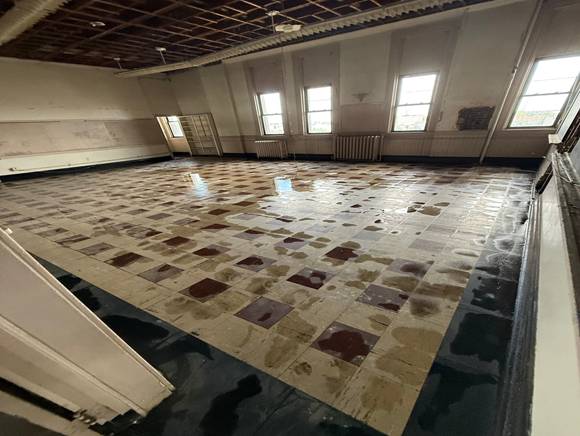
The large classroom spaces had served as primary roosting areas. Floors were covered in a thick layer of dried droppings mixed with feathers, nesting material, and debris that had fallen from deteriorating ceiling tiles above. The droppings were not a surface film. In several rooms, the accumulation was substantial enough to obscure the floor surface entirely. Window sills, radiator covers, baseboards, and any horizontal surface had been used as perching points, each one coated in droppings.
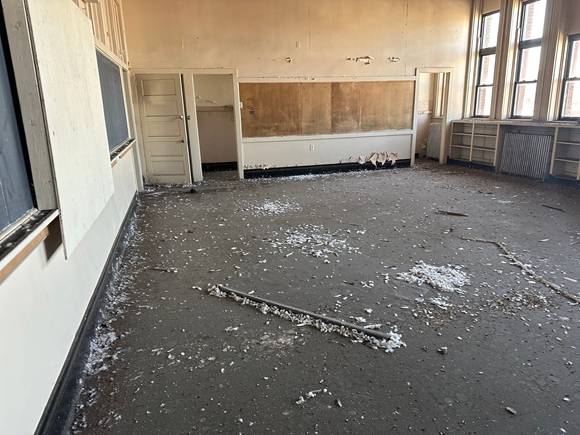
Classroom with heavy bird dropping accumulation across the entire floor surface, with debris from deteriorating ceiling material mixed in.
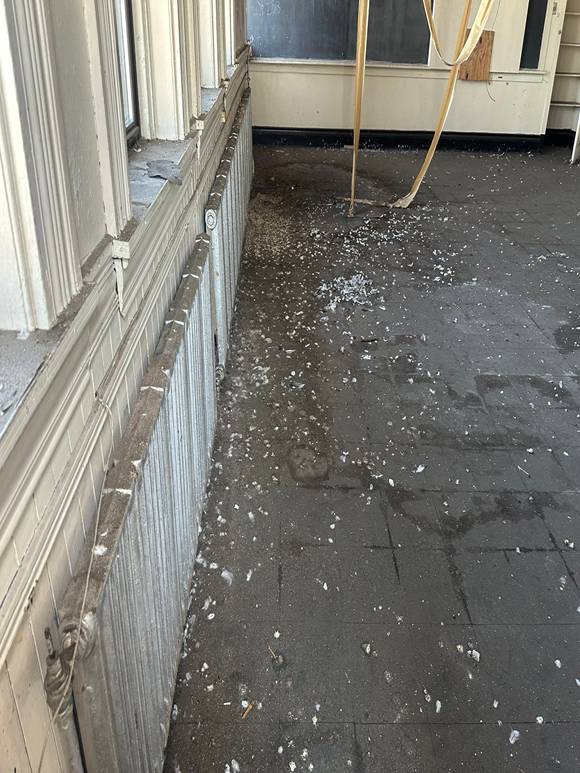
Another classroom showing widespread droppings across a floor. Peeling and water-damaged floor surfaces compounded by years of bird contamination.
Restrooms
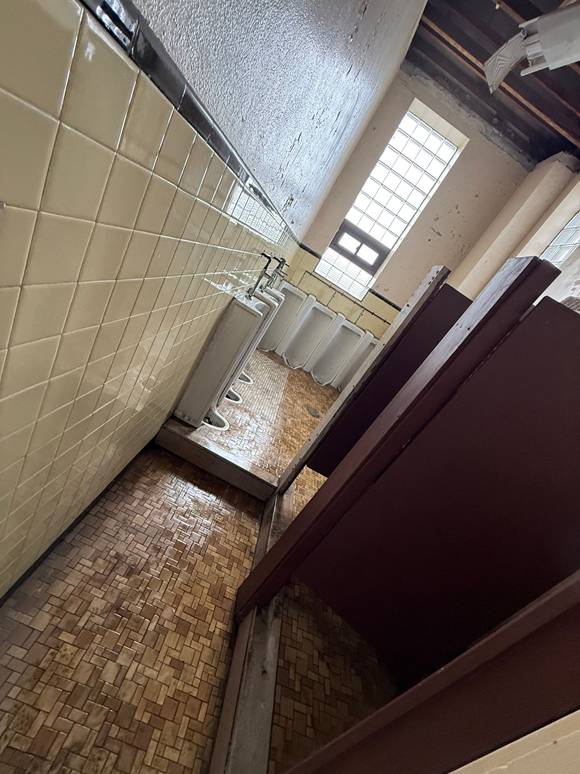
The restrooms were among the most severely contaminated spaces in the building. Toilets, urinals, sinks, floors, partitions, and wall tiles were coated in droppings. The combination of moisture, biological material, and confined space made these areas particularly hazardous from an airborne pathogen standpoint.
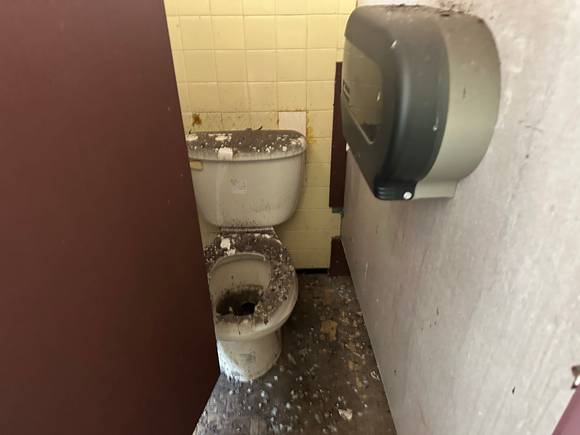
Toilet stall with fixtures caked in bird droppings, contaminated floor, and stained wall tiles — one of the most severely affected areas in the building.
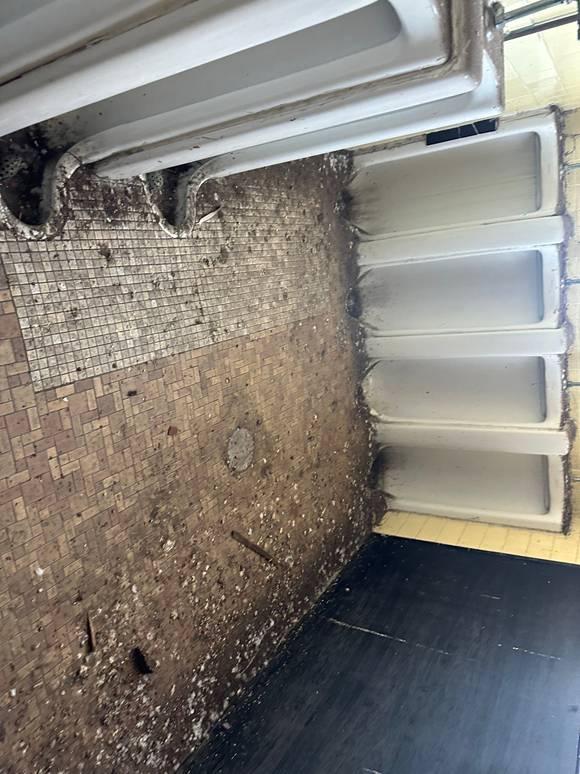
Restroom area showing contamination around sink fixtures and floor drains. Mosaic tile flooring obscured by layers of droppings and debris.
Window Sills, Radiators, and Perching Surfaces
Every horizontal surface near a window became a landing and perching zone for birds entering and exiting the building. Window sills, radiator covers, and the areas directly below them had some of the heaviest localized accumulation, with droppings, feathers, and nesting material piled against baseboards and in corners.
Why Bird Dropping Cleanup Is a Biohazard, Not a Cleaning Job
To someone unfamiliar with the risks, a building full of bird droppings might seem like a dirty space that needs a thorough cleaning. It is not. It is a biohazard environment that poses real and documented health risks to anyone who enters it without proper protection and training.
Histoplasmosis
Histoplasmosis is a respiratory infection caused by inhaling spores of the fungus Histoplasma capsulatum. This fungus thrives in soil and material contaminated with bird and bat droppings, particularly pigeon droppings. When dried droppings are disturbed, whether by sweeping, shoveling, walking through them, or demolition activity, the fungal spores become airborne and can be inhaled deep into the lungs. The CDC specifically identifies cleaning and remodeling old buildings as activities that increase the risk of histoplasmosis exposure. In healthy individuals, exposure may cause mild flu-like symptoms. In immunocompromised individuals, the infection can spread from the lungs to other organs and can be fatal.
Cryptococcosis
Cryptococcosis is another fungal infection associated with bird droppings, caused by Cryptococcus neoformans. This fungus is commonly found in accumulated pigeon droppings and the soil beneath roosting areas. Like histoplasmosis, it is transmitted through inhalation of airborne spores. Cryptococcosis can affect the lungs and, in severe cases, the central nervous system, causing meningitis.
Psittacosis
Psittacosis is a bacterial infection caused by Chlamydia psittaci. It is transmitted through inhalation of aerosolized dried bird droppings or respiratory secretions from infected birds. Psittacosis can cause fever, headache, muscle aches, and in serious cases, pneumonia requiring hospitalization.
Parasites, Allergens, and Structural Damage
Beyond infectious disease, bird-infested buildings carry additional risks. Bird nests and droppings harbor mites, lice, ticks, and other ectoparasites that can bite humans and infest the building. The dried fecal material itself is a potent allergen that can trigger severe respiratory reactions in sensitive individuals. And the uric acid in bird droppings is corrosive. Over time, it eats into stone, concrete, metal, wood, and roofing materials, causing structural deterioration that accelerates the longer the contamination remains in place.
How We Approached the Remediation
A project of this scale requires a structured remediation protocol, not a cleaning checklist. Every step is designed to protect the workers performing the cleanup, prevent cross-contamination to unaffected areas, and ensure that the building is safe for the trades and occupants who will follow.
Personal Protective Equipment
Every crew member entering the contaminated areas wore full personal protective equipment: Tyvek coveralls, shoe covers, nitrile gloves, and NIOSH-approved N95 or P100 respirators. In areas with the heaviest accumulation and the highest risk of airborne particulate, powered air-purifying respirators were available. PPE was donned before entry and doffed in a designated decontamination zone to prevent tracking contaminated material into clean areas of the building or into vehicles.
Containment and Ventilation
Before any disturbance of the droppings began, we established containment barriers between contaminated and uncontaminated zones to prevent cross-contamination through air movement. Negative air machines with HEPA filtration were positioned to create controlled airflow that captured airborne particles and exhausted filtered air to the exterior. This is the same containment principle used in mold remediation and asbestos abatement: control the air, and you control the exposure.
Wet Suppression Before Disturbance
This is one of the most critical steps in any bird dropping remediation, and it is the step that uninformed cleanup crews most commonly skip. Dried bird droppings must never be swept, shoveled, or vacuumed in a dry state. Doing so launches fungal spores and fine particulate into the air at concentrations that overwhelm even basic respiratory protection. The CDC recommends that all accumulated droppings be thoroughly wetted with a water and detergent solution before any disturbance occurs. Wetting the material binds the fine particles together and dramatically reduces the amount of airborne contamination generated during removal.
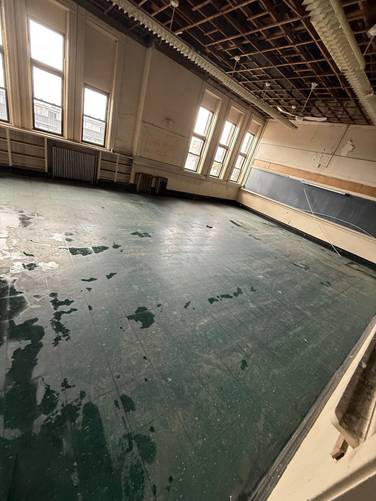
Our crew applied a soaking solution across all contaminated surfaces and allowed adequate soak time before any physical removal began. This is not a quick spray. It is a thorough saturation designed to penetrate the full depth of the accumulation.
Physical Removal
Once the material was thoroughly wetted, our crew physically removed the bulk of the droppings, nesting material, feathers, dead birds, and debris using shovels, scrapers, and wet-vacuum equipment. All material was collected in heavy-duty biohazard bags and disposed of in accordance with local regulations for biohazardous waste. Dead birds were bagged separately.
HEPA Vacuuming
After bulk removal, all surfaces received a thorough pass with HEPA-filtered industrial vacuums to capture residual fine particulate that wet removal alone cannot address. HEPA vacuums trap particles as small as 0.3 microns, which includes the fungal spores responsible for histoplasmosis and cryptococcosis. Standard shop vacuums do not have this capability and would simply exhaust the spores back into the air.
Disinfection and Antimicrobial Treatment
Following removal and HEPA vacuuming, all affected surfaces, including floors, walls, fixtures, window frames, radiators, and any remaining building infrastructure in the contaminated zones, were treated with a professional-grade antimicrobial disinfectant. This step kills residual bacteria, fungal organisms, and parasites on contact surfaces and provides a treated barrier against regrowth.
Deodorization
The odor from long-term bird infestation is severe and persistent. It saturates porous materials and lingers in the air even after physical contamination has been removed. Our crew deployed industrial air scrubbers and deodorization equipment to address airborne odor compounds and treated porous surfaces where odor had been absorbed.
Why This Is Not a DIY Job
Building owners and property managers sometimes attempt to address bird dropping contamination with their own maintenance staff or a general cleaning crew. This is a serious mistake for several reasons.
- Health risk to untrained workers. Without proper PPE, containment, and wet suppression protocols, workers disturbing dried bird droppings are directly inhaling fungal spores and bacteria at concentrations that can cause illness. A maintenance worker with a broom and a dust mask is not protected.
- Cross-contamination of the building. Without containment barriers and negative air, disturbing droppings in one room spreads airborne contamination throughout the building’s air system and into previously clean spaces.
- Improper disposal. Bird droppings, dead birds, and nesting material from a large-scale infestation constitute biohazardous waste. Throwing it in a dumpster may violate local disposal regulations.
- Incomplete remediation. A general cleaning crew does not have HEPA vacuums, antimicrobial treatments, or the training to identify and address all contaminated surfaces. Residual contamination left behind continues to pose health risks.
After the Cleanup: Preparing the Building for What Comes Next
Once the remediation was complete, the building was in a fundamentally different condition than when we started. Floors were visible again. Fixtures were clean. The air was safe to breathe. The space was ready for the next phase of the building’s life, whether that meant renovation, demolition, or reoccupation.
But the cleaning itself is only part of the solution. To prevent reinfestation, the building envelope must be sealed: broken windows repaired, roof vents screened, gaps in the facade closed, and any other entry points that allowed birds into the building in the first place must be addressed. Without exclusion measures, the birds will return, and the cycle will repeat.
A Project That Most Cleaning Companies Will Not Take On
Bird dropping remediation at this scale is not something most commercial cleaning companies are equipped to handle. It requires biohazard training, specific PPE and containment equipment, HEPA filtration capability, knowledge of proper waste disposal protocols, and the willingness to work in conditions that are physically and environmentally demanding.
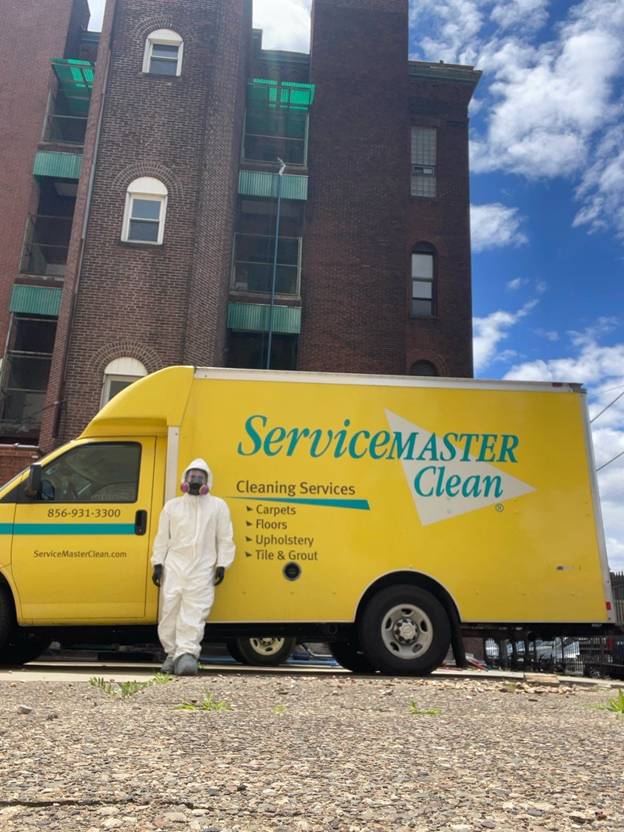
It also requires experience. Understanding how to wet-suppress a three-room classroom floor without creating a flood, how to remove droppings from mosaic tile restroom floors without damaging the substrate, how to contain contaminated air in a building with no functioning HVAC, and how to deodorize a space that has been a bird colony for years are not skills you develop on your first project.