

Artificial Intelligence, Robotics, and the Future of Commercial Cleaning
The cleaning industry, as we know it, is changing. As of 2025, 63% of commercial cleaning companies have integrated artificial intelligence (AI) into their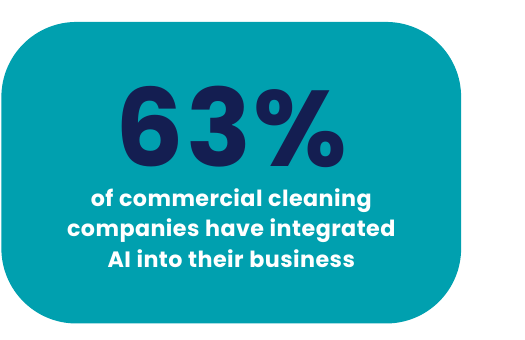 business, up from 38% in 2020. This rapid growth reflects a shift in how the industry will continue to operate, particularly in large facilities where consistency, cost control, workforce availability, and expectations around cleaner, healthier spaces shape operations.
While the technology itself has matured quickly, adoption decisions continue to depend on financial return and operational fit. As Stephen Zimmerman, Vice President of Operations at ServiceMaster Clean®, explains, “Facilities know this [automation] is coming. They’re trying to determine when it becomes practical to invest.”
Organizations evaluating these tools tend to focus on whether systems can offset labor pressures, support better management, and integrate smoothly into existing service models. As the industry navigates this transition over the coming years, providers, clients, and workers must begin to adapt to workflows where humans and automation function together.
Current Sentiments and Adoption
Commercial cleaning services have always required reliable execution and quality. Today, facility leaders increasingly weigh factors such as visibility, consistency, communication, and access to performance data when evaluating service providers and their ability to respond effectively.
At the same time, the industry, like many others, is under pressure to operate more efficiently, generating interest in technology-enabled service models. Many reports suggest AI systems in facilities could reduce corporate energy costs, potentially saving the industry billions of dollars annually.
These trends point to a broader shift in how organizations think about operational performance, even as adoption in cleaning remains concentrated in a handful of practical use cases. Today, floor care robotics and sensor-based monitoring systems represent two of the most accessible entry points.
Robotics in Commercial Cleaning.png)
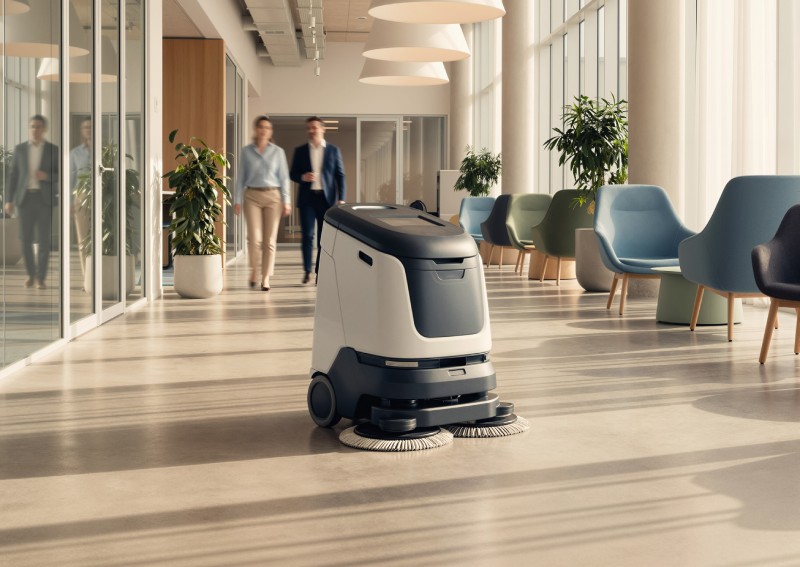
Robotics is expected to play a growing role in the janitorial industry, especially in facilities where repetitive work makes up most daily care.
Current estimates suggest that automated equipment already supports floor cleaning, like vacuuming and surface maintenance, in major facilities. Autonomous floor scrubbers, for example, have been shown to free up to 80% of an operator’s time.
Contrastingly, specialized cleaning that requires dexterity or situational judgment remains dependent on human workers.
Cost is one of the primary factors in adoption decisions, as organizations determine whether a robot can offset labor costs within a defined timeframe. Small pilots can range between $10,000-$50,000, where mid-market deployments often exceed $100,000. Larger buildings tend to have the most financial justification due to their layout, which allows machines to operate continuously across extensive square footage.
Client perception is another influencing factor. In some cases, the visible presence of robotics promotes a sense of innovation and cleanliness. Additionally, major technology companies are piloting human-like robots capable of complex motor functions. However, these continue to face technical limitations in grip strength and safe operation in unpredictable environments.
Operationally, robots still require human oversight for setup and maintenance, but the emerging model will involve fewer personnel to manage machines rather than eliminate human roles.
Artificial Intelligence and Software Advancements
While robotics often draws attention, innovation in commercial cleaning extends beyond, including tools such as smart sensors, performance dashboards, ATP testing, and data-driven reporting that help organizations better understand cleanliness and indoor conditions.
For example, AI systems are increasingly being used to monitor service quality and track resource usage. Predictive maintenance for cleaning equipment and supply inventory automation are examples where early adopters report better efficiency.
AI-driven inventory management is also associated with reductions in stock shortages and waste. These capabilities affect bottom lines for clients while helping cleaning partners stay proactive.
In some cases, AI-enabled cameras and analytics tools are being explored to measure foot traffic patterns and identify cleaning priorities dynamically. These capabilities will allow services to respond to actual usage patterns rather than fixed schedules and enhance accountability.
The impact of AI in the commercial cleaning sector aligns with changes seen in other industries, like logistics and retail, where automation may eventually shift human-workforce responsibilities toward supervision and system management.
Barriers to Adoption
Across all industries, including commercial cleaning, the largest barrier to adoption is organizational change. While stakeholders prepare to shift toward oversight-based roles, many employees have concerns about job security, slowing implementation overall.
Zimmerman notes, “The hard part isn’t the technology, it’s getting teams on board with change, and understanding our team members’ opinions. No one wants to feel like they’ve become obsolete, and they haven’t. The goal for technology in industry is to supplement trained professionals, making them more efficient.”
Financial considerations also play a key role, where high upfront costs and ongoing maintenance requirements influence purchasing decisions.
Finally, adoption without a strategy can limit results. When robotics is introduced without including or aligning with the teams already responsible for day-to-day cleaning, efficiency gains are harder to realize.
In practice, technology is most effective when it is integrated into a cleaning program with ongoing supervision rather than deployed as a standalone solution.
What This Means for Cleaning Partners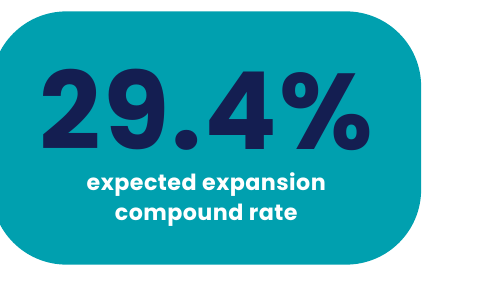
Intelligent technology has staying power. The global AI market in commercial cleaning is expected to expand at a 29.4% compound annual rate by 2027. This level of growth suggests continued interest from facility leaders, and technology capabilities will likely influence vendor selection decision-making over time.
Workforce roles are also shifting. As automated tools begin to handle routine tasks, employees will spend more time supervising equipment and completing specialized work, ultimately affecting organizational workforce planning.
Internally, our goal at ServiceMaster Clean is not to replace the expertise of trained professionals but to equip them with better tools and more efficient workflows that elevate the level of service they provide.
As automation expands, the role of our frontline teams is likely to become more skilled, more supervisory, and more closely tied to delivering clean, safe, and healthy environments.
Additionally, the rise in robotics has long-term implications for business models as subscription-based pricing and equipment leasing are becoming more common within facility management. For many providers, these developments pose important questions about ownership and long-term revenue opportunities.
Looking Ahead: Automation and Robotics at ServiceMaster Clean
At ServiceMaster Clean, we recognize that exploring AI and robotics is necessary to stay aligned with industry developments, especially as client interest grows.
Our corporate team has been testing robotics and emerging technologies since 2017, including early pilots that evaluated efficiency and perception. These experiences continue to inform our approach as new developments occur and adoption increases across the industry.
At the same time, many specialized services and routine tasks still require professional intervention due to the current limitations of autonomous tools.
Looking ahead, our team remains forward-thinking and open to integrating automation where it delivers real value while continuing to invest in the judgment and accountability of human expertise.
- AI In The Commercial Cleaning Industry. 2026. ZipDo.
- AI in The Cleaning Industry. 2026. Wifi Talents.
- The Hidden Costs and Benefits of AI Adoption in Business. 2026. Adoptify AI.

