Open PDF
January sets the mood for the entire year in commercial facilities. After months of higher foot traffic, holiday gatherings, seasonal illness, and weather-related contaminants, most buildings begin the new year carrying more than just outstanding jobs—they carry germs, residue, and operational risk.
For facility managers, property owners, and business leaders, January serves as more than a calendar reset. It is the most strategic month to reestablish cleaning standards, protect employee health, and reinforce professional facility management practices.
The Post-Holiday Reality of Commercial Facilities
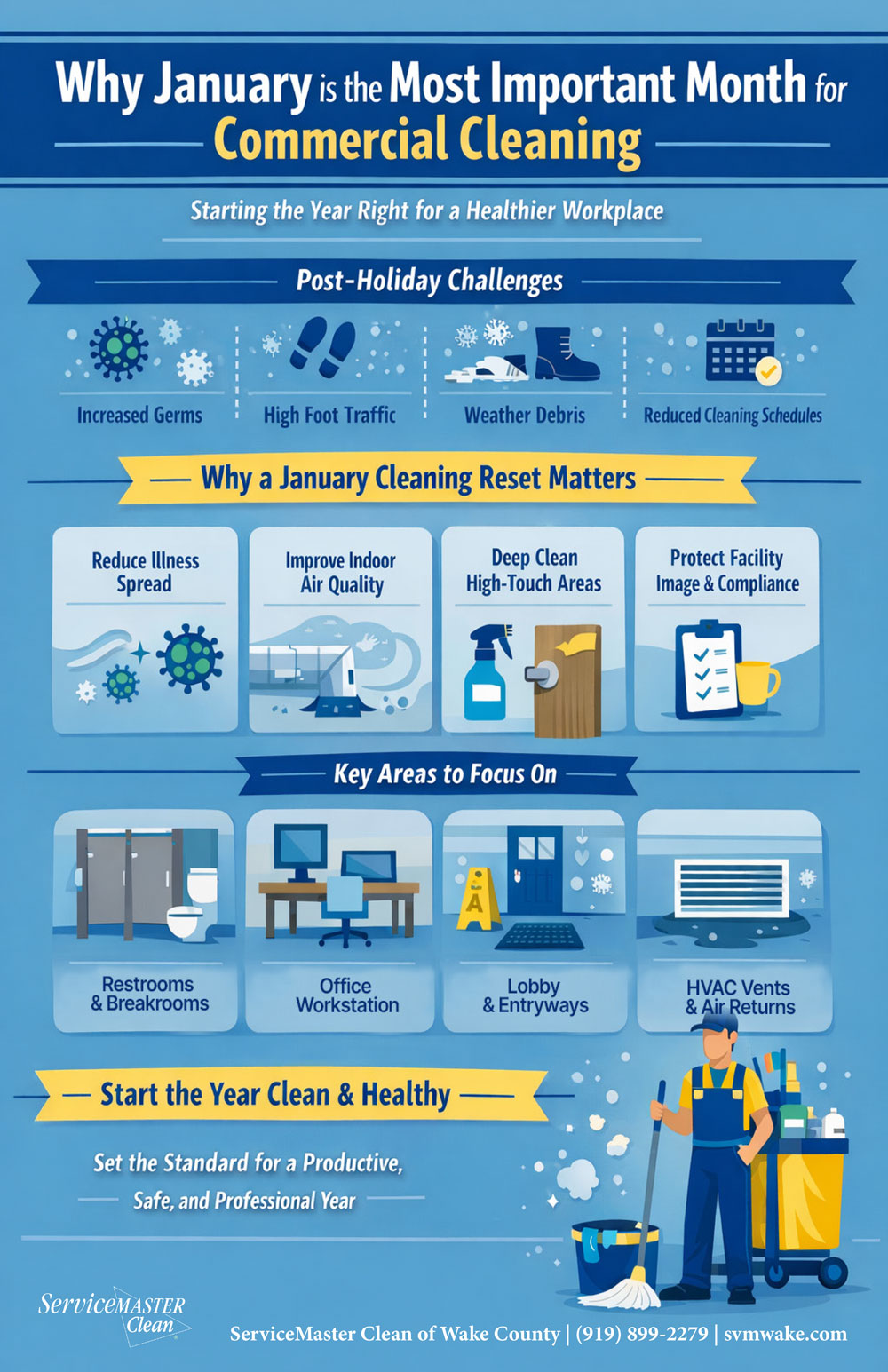
By January, commercial buildings have experienced:
Higher-than-normal occupancy
Increased use of shared spaces
Elevated germ transmission
Weather-related debris tracked indoors
Reduced cleaning focus during holiday schedules
Even facilities with consistent janitorial service often see cleaning gaps during late November and December due to modified schedules, staffing challenges, and increased traffic. Left unaddressed, these gaps can lead to increased absenteeism, tenant dissatisfaction, and long-term facility wear and tear.
Why Illness Spikes in Commercial Workplaces in January
January is peak season for colds, flu, and other communicable illnesses. In commercial environments—where shared workstations, conference rooms, restrooms, and break areas are common—pathogen transmission can accelerate rapidly.
Shared touchpoints:
Door handles
Elevator buttons
Breakroom appliances
Conference tables
Shared equipment
They are often underestimated in routine cleaning programs. In the absence of targeted disinfection, these surfaces become ongoing sources of illness, affecting productivity and employee morale.
A strategic January cleaning reset helps interrupt this cycle.
The Business Case for a January Deep Clean
Commercial cleaning is not purely cosmetic. It is a core operational function that supports:
A January deep cleaning initiative allows facilities to:
Address overlooked areas
Reestablish cleaning benchmarks
Align cleaning protocols with occupancy patterns
Prepare for increased activity in Q1
This forward-thinking strategy reduces reactive complaints and helps organizations operate more efficiently year-round.
Key Areas Often Overlooked in Commercial Cleaning
While floors and visible surfaces receive consistent attention, many critical areas do not. January is an ideal time to focus on:
1. Restrooms
Fixtures, partitions, dispensers, and ventilation areas accumulate bacteria and odors that routine cleaning may miss.
2. Breakrooms and Kitchens
Shared appliances and food-prep surfaces require thorough sanitation to reduce cross-contamination.
3. Office Workstations
Desks, phones, keyboards, and chair arms are among the most contaminated surfaces in office environments.
4. Entryways and Common Areas
Salt, moisture, and debris tracked inside during the winter months damage flooring and create safety hazards.
5. HVAC Vents and Air Returns
Dust and microbial buildup affect indoor air quality and employee comfort.
Attending to these areas improves both hygiene and facility longevity.
Indoor Air Quality: An Invisible January Priority
With doors and windows closed during colder months, indoor air quality becomes an important matter. Dust, allergens, and airborne contaminants circulate continuously, impacting respiratory health and comfort.
Poor indoor air quality contributes to:
Increased sick days
Reduced concentration and productivity
Higher employee complaints
Perceived facility neglect
Professional commercial cleaning programs that include dust control and HVAC-area attention help support cleaner indoor environments—particularly important at the start of the year.
Compliance, Consistency, and Professional Standards
January is also a practical time for facilities to review cleaning protocols against industry standards and internal expectations. In regulated environments such as healthcare, education, manufacturing, and multi-tenant offices, cleaning consistency directly affects compliance and liability.
Partnering with a professional provider such as ServiceMaster Clean helps ensure:
Documented cleaning procedures
Trained and accountable staff
Consistent service delivery
Ability to accommodate facility-specific needs
This level of professionalism is difficult to maintain with ad hoc or under-resourced cleaning solutions.
Setting the Mood for the Year Ahead
January cleaning decisions influence the entire year. Facilities that invest early benefit from:
Rather than reacting to problems as they arise, a structured January cleaning strategy positions organizations for consistency and achievement.
Commercial facilities operate best when cleanliness is treated as a strategic priority—not a background task. January offers a critical opportunity to reset standards, protect people, and reinforce professionalism.
By addressing post-holiday buildup, focusing on health-driven cleaning, and partnering with experienced commercial providers, companies can begin the year with confidence—and sustain that momentum long after winter ends.