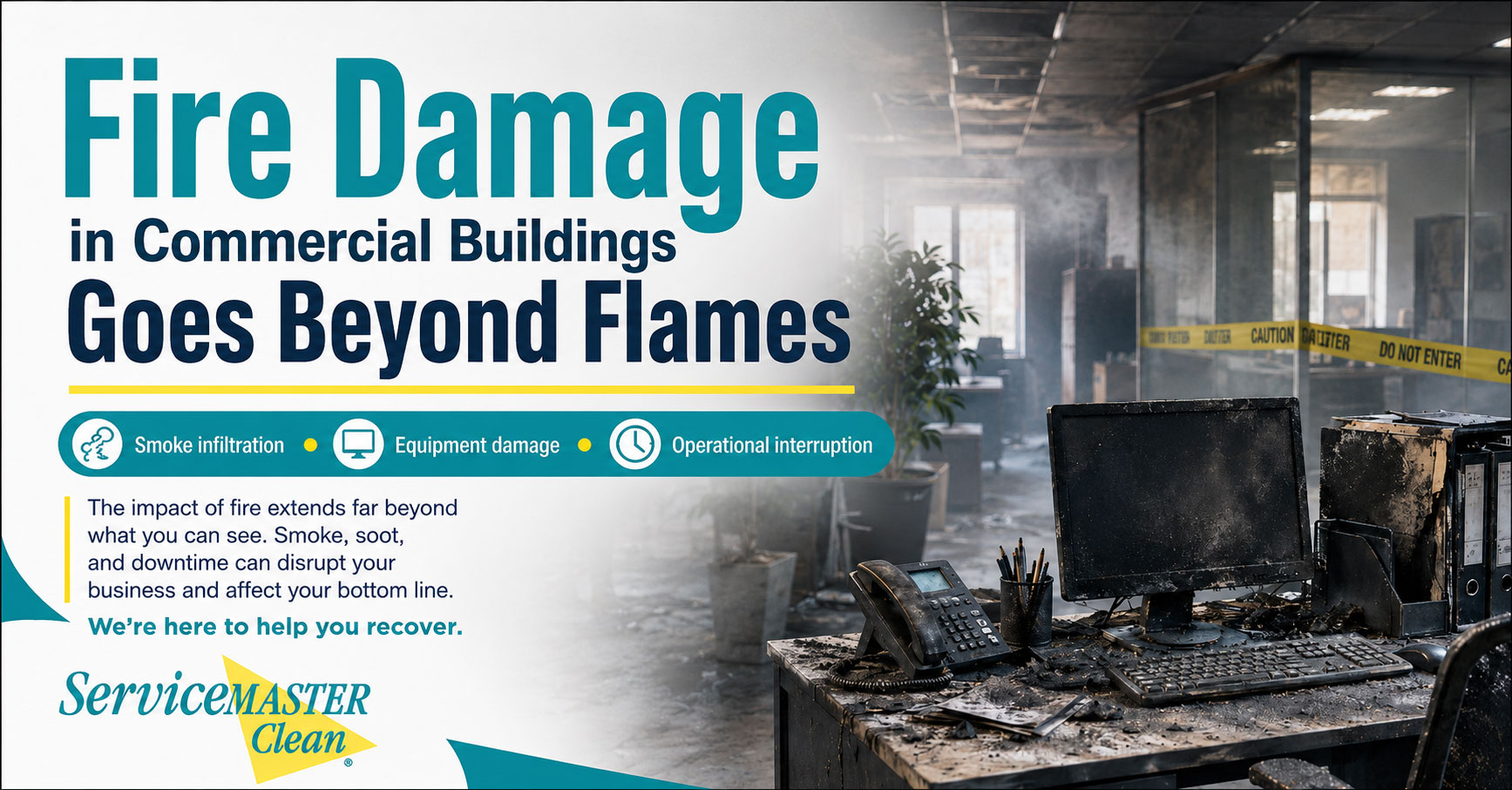
When most people think about fire damage, they picture burned walls, charred materials, and visible destruction. While flames can cause serious structural damage, the impact of a commercial fire often extends far beyond what the eye can see.
For facility managers, business owners, property managers, and operations teams, the real challenge after a fire is understanding the full scope of damage. Smoke, soot, odor, moisture from firefighting efforts, equipment contamination, and business interruption can all affect how quickly a building can safely reopen.
A small fire in one part of a commercial facility can create problems throughout the entire building. That is why professional fire and smoke damage cleanup is so important after any fire event, even one that appears contained.
Smoke Can Travel Far Beyond the Fire Area
Smoke does not stay neatly in one room. It moves through open spaces, hallways, HVAC systems, ceiling cavities, wall gaps, vents, ductwork, and shared air circulation pathways. In commercial buildings, this can mean smoke contamination reaches offices, breakrooms, storage areas, restrooms, conference rooms, retail floors, production areas, and other occupied spaces.
Even when the flames are quickly extinguished, smoke residue can settle on surfaces throughout the property. This residue may appear as a fine film, dark staining, sticky soot, or lingering odor. In some cases, the damage is obvious. In others, it may be hidden inside vents, on ceiling tiles, behind equipment, or within porous materials.
Smoke infiltration can affect:
Walls, ceilings, and flooring
Office furniture and upholstery
Computers, printers, phones, and electronics
Inventory and stored materials
HVAC systems and ductwork
Documents, files, and paper products
Breakroom appliances and food storage areas
Restrooms and shared employee spaces
The longer smoke residue remains, the more difficult it can be to remove. It may continue to spread odor, discolor surfaces, and affect indoor air quality.
Soot Is More Than a Cosmetic Problem
Soot is made up of tiny particles created when materials burn. Depending on what burned during the fire, soot may contain residues from plastics, wood, fabrics, chemicals, paper, rubber, insulation, or other building contents.
In a commercial environment, soot can settle quickly and cling to surfaces. It may appear powdery, oily, acidic, or sticky. Different types of soot require different cleaning methods, which is why wiping it away with standard cleaning products can make the problem worse.
Improper cleaning may smear soot, push residue deeper into porous materials, or permanently stain surfaces. Professional cleaning teams use specialized techniques to identify the type of residue and determine the right cleaning process for each surface.
Fire Damage Can Harm Equipment and Electronics
Commercial buildings often contain expensive equipment that keeps the business running. This may include computers, servers, machinery, point-of-sale systems, security systems, medical-style equipment, printers, copiers, appliances, HVAC components, and communication systems.
Even if equipment does not burn directly, it may still be affected by smoke, soot, moisture, and heat exposure. Fine particles can enter vents, ports, circuit boards, motors, and internal components. Moisture from fire suppression efforts can also create corrosion risks.
Equipment damage may not be immediately visible. A computer or machine may turn on after a fire but fail days or weeks later due to internal contamination. For businesses that rely on technology or specialized equipment, this can create unexpected downtime and costly repairs.
After a fire, commercial equipment should be evaluated carefully before being used again. In many cases, professional restoration, cleaning, documentation, and coordination with insurance providers are important parts of the recovery process.
Odor Can Disrupt Employees, Customers, and Operations
One of the most persistent problems after a commercial fire is odor. Smoke odor can linger in carpet, upholstery, drywall, ceiling tiles, insulation, wood, fabrics, and HVAC systems. Even after visible soot is removed, the smell may remain if the source of the odor is not properly treated.
For businesses, odor is more than an inconvenience. It can affect customer perception, employee comfort, and the overall professionalism of the space. A building that smells like smoke may feel unsafe or unclean, even if the visible damage has been addressed.
Professional fire damage cleanup often includes odor control methods designed to treat the source of the odor rather than simply covering it up. This may involve deep cleaning, air filtration, HVAC attention, removal of damaged porous materials, and specialized deodorization techniques.
Water and Moisture Damage Often Follow a Fire
Fire damage cleanup is rarely only about fire. Water from sprinklers, fire hoses, or suppression systems can create additional problems throughout the building.
Moisture can affect flooring, baseboards, drywall, cabinetry, ceiling materials, insulation, furniture, and stored inventory. If not addressed quickly, moisture may contribute to staining, swelling, warping, mold growth, and indoor air quality concerns.
This creates a layered restoration process. A commercial property may need fire damage cleanup, smoke and soot removal, odor control, water extraction, drying, dehumidification, and structural cleaning.
The faster these issues are addressed, the better the chance of reducing secondary damage.
Operational Interruption Can Be One of the Biggest Costs
For many businesses, the most expensive part of a fire is not only the physical damage. It is the disruption to daily operations.
A commercial fire may lead to:
Temporary closure
Employee displacement
Canceled appointments or services
Lost sales or production time
Damaged inventory
Technology downtime
Customer inconvenience
Insurance delays
Compliance or safety concerns
Even a small fire can interrupt normal operations if smoke spreads into occupied areas or if equipment is affected. For property managers and facility teams, the goal is not just to clean the building. The goal is to help the business move toward safe, efficient reopening.
A professional cleanup team can help document damage, prioritize critical areas, and create a recovery plan that supports business continuity.
Why Professional Fire and Smoke Cleanup Matters
Commercial fire damage should never be treated like routine cleaning. Fire residue behaves differently depending on the materials involved, the temperature of the fire, the amount of oxygen present, and the surfaces affected.
Professional restoration teams understand how to assess damage, clean affected materials, control odor, and reduce the risk of further contamination. They also understand the importance of working efficiently so businesses can reduce downtime.
A professional fire and smoke damage cleanup process may include:
Site evaluation and damage assessment
Safety review of affected areas
Smoke and soot residue removal
Cleaning of walls, ceilings, floors, and surfaces
Odor control and deodorization
HVAC and air movement considerations
Moisture extraction and drying when needed
Contents cleaning and inventory support
Documentation for insurance purposes
Coordination with property owners, managers, and vendors
Every fire situation is different. The cleanup plan should be based on the building type, extent of damage, materials affected, and operational needs of the business.
Steps Facility Managers Should Take After a Commercial Fire
After emergency responders have cleared the scene and the building is safe to access, facility managers should begin documenting and organizing the recovery process.
Start by avoiding unnecessary movement through affected areas. Walking through soot or touching damaged surfaces can spread contamination. Take photos and notes where it is safe to do so. Document affected rooms, equipment, inventory, and visible residue.
Contact your insurance provider and begin the claims process. Then bring in a qualified professional cleanup team to assess the damage and recommend the next steps.
It is also important to communicate with employees, tenants, customers, or vendors as needed. Clear communication helps manage expectations and reduce confusion during the recovery period.
Do Not Ignore “Minor” Fire Events
A small fire in a breakroom, electrical closet, storage area, or mechanical room can still create widespread smoke and odor issues. Even if the flames were limited, smoke may have traveled through the building.
Ignoring minor fire damage can lead to lingering odor, hidden residue, equipment problems, and delayed repairs. Addressing the issue quickly helps protect the building, the people who use it, and the business itself.
Protecting Your Building After Fire Damage
Fire damage in commercial buildings goes beyond flames. Smoke infiltration, soot residue, equipment contamination, odor, water damage, and operational interruption can all affect the safety, cleanliness, and function of your facility.
When a fire occurs, fast and professional cleanup can make a significant difference. The right response helps reduce secondary damage, supports a safer environment, and helps your business move toward recovery with greater confidence.
For commercial property owners, managers, and facility teams, the key is simple: do not judge fire damage by what burned. Look at the full impact on the building, the equipment, the air, and the operation.