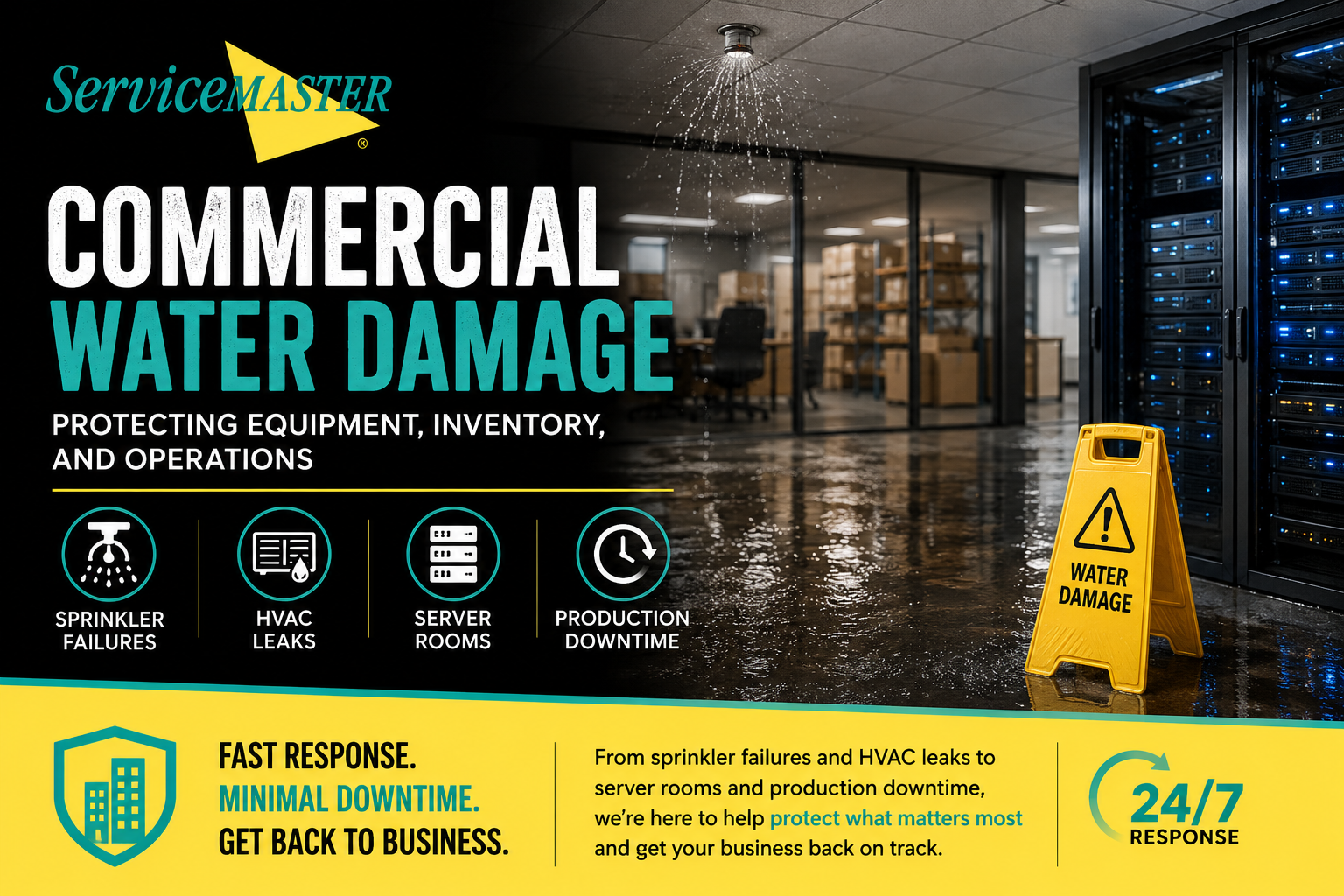
 Water damage in a commercial building can happen quickly, and the impact can reach far beyond wet floors or damaged walls. For businesses, even a small leak can threaten equipment, inventory, technology, documents, and daily operations. Whether the cause is a sprinkler system failure, HVAC leak, burst pipe, roof issue, or hidden plumbing problem, fast action is critical to reduce damage and downtime.
Commercial water damage is especially disruptive because every hour matters. When workspaces, storage rooms, production areas, or server rooms are affected, businesses may face costly delays, lost revenue, safety concerns, and damaged property. Having a plan in place before water damage occurs can help protect your business and keep operations moving.
Common Causes of Commercial Water Damage
Commercial properties often have complex systems that can fail unexpectedly. Some of the most common causes of water damage include:
Sprinkler system failures
Fire sprinkler systems are essential for safety, but accidental activation, broken sprinkler heads, or system malfunctions can release a large amount of water in a short period of time. This can affect offices, warehouses, retail floors, storage areas, and electrical systems.
HVAC leaks
Heating and cooling systems can create water damage through clogged drain lines, condensation buildup, leaking units, or poor maintenance. HVAC leaks may start small but can lead to ceiling damage, mold growth, and hidden moisture inside walls or flooring.
Plumbing issues
Burst pipes, leaking fixtures, backed-up drains, and water supply line failures can quickly damage commercial interiors. In multi-level buildings, water can travel from one floor to another, spreading damage beyond the original source.
Roof and exterior leaks
Storms, clogged gutters, aging roofing materials, and damaged flashing can allow water to enter a building. These leaks may affect offices, inventory areas, ceilings, insulation, and structural materials.
Protecting Equipment and Technology
Office equipment, machinery, point-of-sale systems, and production tools are major investments. Water exposure can cause electrical hazards, corrosion, malfunction, and permanent damage.
Server rooms and IT closets are especially vulnerable. Even a small amount of moisture can disrupt networks, damage hardware, and put important data at risk. Businesses should keep technology areas protected with proper ventilation, leak detection systems, raised equipment placement when possible, and routine inspections of nearby plumbing, HVAC, and sprinkler systems.
After water damage occurs, equipment should not be powered on until it has been inspected. Electrical safety should always come first.
Protecting Inventory and Documents
For retail stores, warehouses, medical offices, schools, restaurants, and manufacturing facilities, inventory loss can be one of the largest costs of water damage. Products, packaging, supplies, files, records, and materials can be ruined quickly if water is not removed and drying does not begin right away.
Businesses should store important inventory and documents off the floor when possible, use waterproof storage for critical records, and keep digital backups of essential paperwork. If water damage happens, separating affected items from unaffected items can help reduce the spread of moisture and contamination.
Reducing Production Downtime
Water damage does not only affect the physical building. It can interrupt schedules, delay orders, close customer-facing areas, and stop production completely. The longer moisture remains, the greater the risk of secondary damage, including mold growth, odor, structural deterioration, and equipment failure.
A professional commercial water damage response team can help businesses recover faster by removing water, drying affected areas, documenting damage, and helping restore safe working conditions. Quick response can make the difference between a short disruption and a long-term shutdown.
What To Do When Commercial Water Damage Happens
If your business experiences water damage, take these steps as soon as possible:
Stop the source of water if it is safe to do so.
Avoid entering areas with standing water near electrical equipment.
Move employees and customers away from affected areas.
Protect important documents, inventory, and equipment if it can be done safely.
Contact a professional water damage restoration team immediately.
Document visible damage with photos for insurance purposes.
The goal is to act quickly while keeping safety the top priority.
Prevention Starts With Regular Maintenance
While not every emergency can be avoided, regular inspections and maintenance can reduce the risk of commercial water damage. Businesses should schedule routine checks of sprinkler systems, HVAC units, plumbing lines, roofing, drains, and storage areas. Employees should also know who to contact if they notice leaks, stains, unusual odors, or standing water.
A written emergency plan is also important. Knowing where shut-off valves are located, who is responsible for emergency decisions, and which restoration company to call can save valuable time during a crisis.
Protect Your Business Before Water Damage Disrupts Operations
Commercial water damage can affect equipment, inventory, technology, and daily operations within minutes. From sprinkler failures and HVAC leaks to server room concerns and production downtime, every business should be prepared.
Fast response, proper drying, and professional restoration help limit damage and get your business back to normal as quickly as possible. If your commercial property has experienced water damage, do not wait. The sooner the cleanup and drying process begins, the better your chance of protecting your building, assets, and operations.